
Bee-Bot
Animation
Session 1 of 6 · Treasure Island Adventure
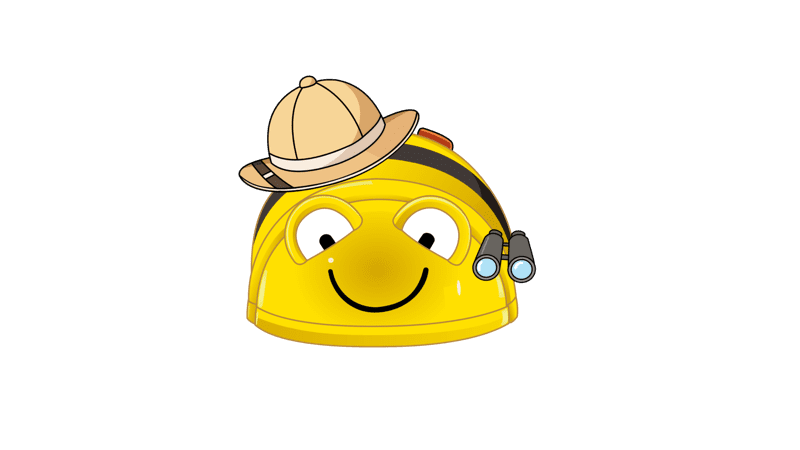
Learning to code
through adventure.
Bee-Bot Animation is a 6-session educational animation series produced by Magic Motion Studio for early childhood learners. Each episode follows Bee-Bot, a friendly yellow explorer robot, on a Treasure Island adventure that teaches children the fundamentals of coding, sequencing, and programming through hands-on activities guided by the animation.
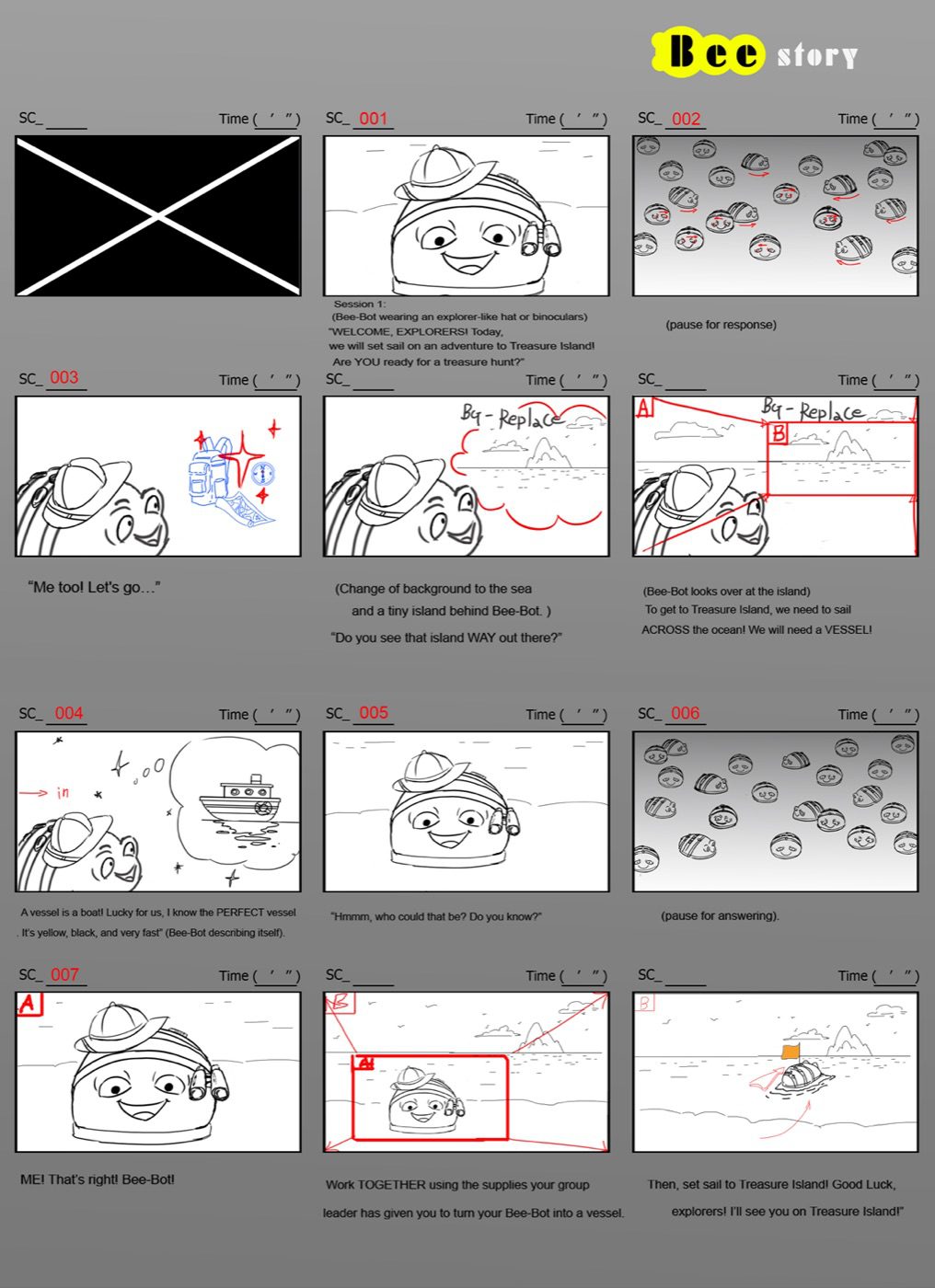
In Session 1, Bee-Bot introduces young learners to the concept of a vessel and sets the scene for the adventure ahead. Children are invited to transform their own Bee-Bot into a vessel and set sail to Treasure Island, learning through play, movement, and imaginative storytelling.
Set Sail to Treasure Island
Session 1 Storyboard
Style and Approach
Bright, friendly 2D animation designed for early childhood engagement. Warm color palette, expressive character design, and simple clear backgrounds keep young viewers focused and entertained.
Each session introduces one new vocabulary word and one hands-on coding activity. Animation bridges screen-time with physical play, keeping children active and learning simultaneously.
The Treasure Island adventure unfolds across 6 sessions, giving children a connected story to follow. Each episode ends with an open activity that encourages teamwork and creative problem solving.
Bee-Bot Animation: A 6-Session Curriculum-Aligned Series for Early Childhood Coding
Bee-Bot Animation is a 6-session educational animated series produced by Magic Motion Studio for early years and Key Stage 1 classrooms. Each episode follows Bee-Bot, a friendly yellow explorer robot, on a Treasure Island adventure that introduces children aged 3 to 7 to the building blocks of coding: directional language, sequencing, computational thinking, and floor robot programming. The series is engineered to work alongside physical Bee-Bot robots in the classroom, creating a direct bridge between animated storytelling and hands-on STEM learning.
Session 1, "Set Sail," introduces the word VESSEL, establishes the adventure, and invites children to transform their own Bee-Bot into a boat. Across six sessions the series builds a structured learning arc, progressing from foundational vocabulary and sequencing through problem-solving, emotions, design thinking, and collaborative activity. Every episode ends at peak engagement and hands the learning to the child, making the screen-to-floor transition the central pedagogical event of each lesson.
Why Schools Are Turning to Animation to Teach Coding in Early Years Classrooms
Computer science has been part of the statutory curriculum in England since 2014, and early years digital technology is embedded in the EYFS framework, the Australian Digital Technologies curriculum, and the CSTA K–2 standards in the United States. Schools across every market are actively seeking high-quality animated resources that make abstract concepts like sequencing, directional language, and algorithmic thinking genuinely accessible to children aged 3 to 7, an age group for which printed worksheets and text-based instruction simply do not work.
Research from the Joan Ganz Cooney Center and Common Sense Media consistently demonstrates that children aged 2 to 8 retain information up to three times more effectively through animated storytelling than through static instruction alone. Character-driven animation reduces cognitive load for pre-literate learners, sustains attention across a complete lesson, and creates the emotional hook that makes vocabulary stick. Bee-Bot, produced by TTS Group and deployed in over 50,000 primary schools across the UK, USA, and Australia, sits at the centre of this demand, and curriculum-ready animated content to accompany it remains one of the most under-served resources in early years education.
The global edtech market exceeded $4 billion in 2023 and is projected to grow at 15% annually through 2028 (Grand View Research). For studios and content creators, early childhood educational animation is one of the highest-demand, lowest-competition content niches in educational media today.
How We Create Educational Animation That Actually Supports Coding Curricula
Producing effective educational animation for early childhood requires far more than strong visuals. Every creative decision, character design, scene pacing, vocabulary sequencing, narrative structure, and the timing of activity handovers, must directly serve the learning objectives of the target age group. Magic Motion Studio works with educators and curriculum specialists to ensure every educational animation session is pedagogically sound, classroom-ready, and aligned to national standards before a single frame is animated.
Age-Appropriate Character Design
Bee-Bot's animated character balances recognisable likeness to the physical toy with expressive character traits, oversized eyes, clear emotional displays, and deliberate movement that children aged 3 to 7 can read instantly. Familiarity with the physical robot deepens the connection between on-screen character and classroom activity.
Curriculum Mapping and Learning Objectives
Each educational animation session is built around a specific coding or computational thinking concept drawn from EYFS, KS1 Computing, and CSTA K–2 standards. Session 1 targets directional vocabulary and the concept of a vessel. Sessions 2 through 6 progress through sequencing, debugging, problem-solving, collaboration, and design thinking in a deliberate pedagogical sequence.
Vocabulary Integration Across Every Beat
Each episode introduces one key vocabulary word through repetition, context, and child-participation moments. Language acquisition is embedded in the narrative, not appended to it. The word VESSEL is introduced, defined, and reinforced across three separate beats within a single episode, the exact pattern recommended by early childhood language acquisition research for pre-literate learners.
Activity-Led Narrative Structure
Every episode is structured to pause at the moment of peak engagement and hand the learning to the child. The animation does not complete the task, it sets up the problem and invites the child to solve it with their physical Bee-Bot. The screen-to-floor transition is designed to be the most memorable moment of every lesson.
Pacing and Attention Design for Ages 3–7
Scene durations, cut frequency, musical tempo, and voice pacing are all calibrated to the attention window of children in early years and KS1 settings. No scene exceeds 45 seconds. Transitions are clear, predictable, and reinforced by both visual and audio cues, key design requirements for neurodiverse and pre-literate learners.
Six-Session Connected Story Arc
The Treasure Island adventure unfolds across 6 sessions, giving children a connected narrative to follow over multiple weeks. Story continuity increases engagement, encourages recall of prior learning, and provides teachers with a structured, curriculum-spanning resource that builds progressively rather than resetting at every lesson.
Magic Motion Studio: Children's Educational Animation and STEM Content Production
Magic Motion Studio is a full-service educational animation studio specialising in children's animated series, STEM explainer videos, and curriculum-based animated content for schools, edtech companies, educational publishers, and toy brands worldwide. With over 1,000 animated projects delivered across 50 industries and more than a decade of production experience, the studio brings broadcast-quality production values to educational content at every budget and scale.
Bee-Bot Animation is a live demonstration of the studio's end-to-end capability in the educational animation sector: six curriculum-aligned episodes, a consistent original character, age-appropriate vocabulary integration, EYFS and KS1 learning objective alignment, and a hands-on activity structure woven into every session. The studio's wider portfolio includes Larry N Leonard, a full adult animated comedy pilot, and BitBrawl, a cinematic 2D fight scene animation, demonstrating the studio's range across every animation genre and audience.
Need Educational Animation for Your STEM Curriculum, EdTech Product, or Coding Toy?
If you are a school, multi-academy trust, edtech company, educational publisher, or toy brand that needs high-quality educational animation to support coding and STEM learning in early childhood, Magic Motion Studio can produce it. The studio has developed original animated characters, built complete multi-session educational series, and delivered curriculum-aligned animated content for early years and primary education settings across the UK, USA, and Australia.
From initial curriculum mapping and character design through full 2D animation, voice recording, sound design, and classroom-ready delivery, the entire production process is handled in-house, so your educational content is both pedagogically sound and visually compelling from day one.